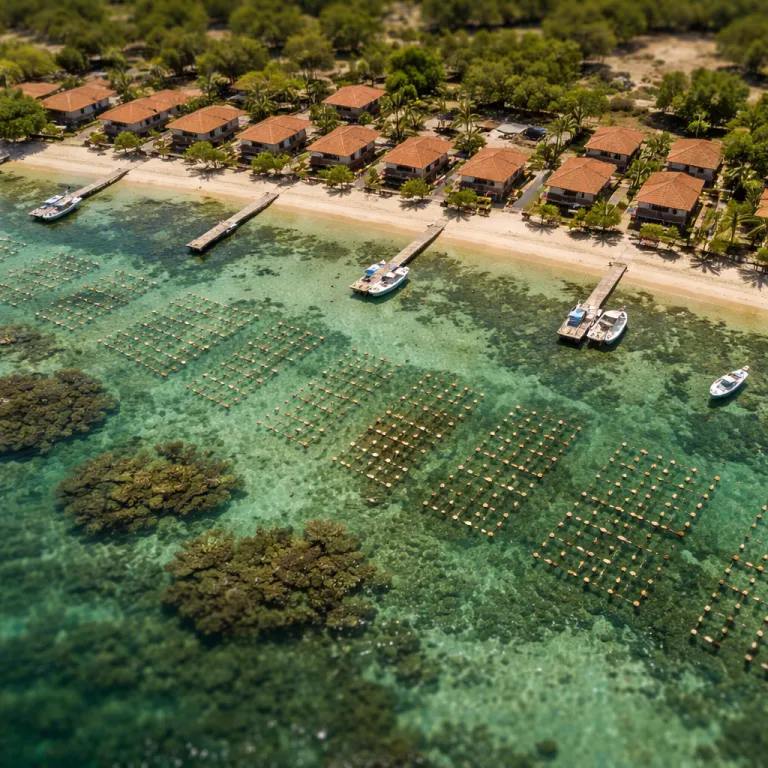
Reef reality in the Bay Islands: where the wall still breathes
Honduras now sits on a fault line between reef crisis and careful recovery. The 2020 Healthy Reefs for Healthy People report on the Mesoamerican Barrier Reef System notes that around 56% of monitored sites are in poor or critical condition (2020 Status Report, Mesoamerican Reef, p. 10), which directly affects how you should evaluate Honduras dive resort sustainability before booking. For luxury travelers, that means choosing a resort in Roatán or on another island is no longer just about the view but about whether your stay helps living coral or quietly accelerates its decline.
On Roatán, the healthiest coral gardens cluster along the north and west shores, where the Roatán Marine Park co-manages moorings and patrols fishing restrictions across more than 15,000 acres of protected area; its 2023 summary notes more than 120 active mooring buoys and hundreds of patrols per year. You still see branching coral fragments, schools of creole wrasse and the occasional hawksbill turtle on a morning dive, yet some shallow sites show clear bleaching bands and algae creep that even first time divers notice. The Roatán Marine Park’s Coral Reef Ambassador Program now invites guests to join supervised conservation dives, where trained divers help maintain coral nursery structures, assist with outplanting hundreds of coral fragments each season and log marine data that feed into regional conservation models.
For serious scuba travelers, this is changing the definition of the best dive destinations in Honduras. A resort that advertises easy diving but cannot explain its role in the marine park, its support for mooring maintenance or any coral nursery work is trading on yesterday’s reef reputation. When you compare properties across the Bay Islands, ask how their house reef is monitored, whether their dive center follows Green Fins environmental standards, when they were last assessed and how often their guides brief divers on Project AWARE style protocols underwater.
From Anthony’s Key to eco lodges: which Roatán resorts walk the talk
On Roatán, Honduras dive resort sustainability now divides properties into three clear camps. At one end sits Anthony’s Key Resort, a long established key resort that runs a large dive center and markets itself heavily to international divers, yet its dolphin program and scale raise questions for travelers who prioritise low impact marine experiences and smaller group sizes. At the other end, eco lodge style properties such as Tranquilseas Eco Lodge and Dive Center and Kimpton Grand Roatán Resort + Spa foreground solar power, water desalination and local sourcing as part of a broader conservation narrative, reporting that a significant share of their electricity demand is met by renewables and that most seafood is purchased from local fishers.
Between these poles, operations like Sun Divers Roatán position themselves as a friendly dive center for the independent divers Roatán attracts, focusing on small groups and careful briefings on buoyancy and coral safe finning. When you plan diving Roatán trips, look for a resort or stand alone dive center that caps group sizes at six to eight divers per guide, bans single use plastics on boats and supports Roatán Marine Park fees without treating them as optional extras. For overnight connections through the mainland, our guide to a credible airport hotel at Palmerola outlines how to keep the same sustainability standards when you choose a gateway stopover property before flying on to the Bay Islands, from basic wastewater treatment to energy efficient lighting.
Resort managers now report that guests ask sharper questions about Honduras dive resort sustainability, from wastewater treatment to how often boats are serviced to minimise fuel leaks into the water. One industry summary notes that “Increased demand for sustainable travel, Resorts adopting green certifications, Growth in eco-tourism packages,” and several Roatán operators now publish annual impact notes with figures on fuel use and reef support. To compare quickly, focus on a few hard metrics: maximum divers per guide, percentage of energy from renewables, number of moorings maintained or funded in the last 12 months, and whether any recent Green Fins style audit or equivalent environmental review has been completed.
Utila, Guanaja and how to book a reef positive luxury stay
Move east from Roatán and the picture shifts, with Utila and Guanaja offering a different balance between remoteness and reef pressure. Utila’s shallower fringing reef still hosts dense coral heads and regular turtle sightings, and eco focused properties such as Odyssey Resort Utila and several Utila dive operations keep group sizes small to reduce stress on marine life and limit the number of daily boat departures. Guanaja, further out among the Bay Islands, remains less developed, which means fewer divers in the water but also fewer formal conservation programmes and less funding for structured coral nursery projects or long term monitoring.
For guests comparing Roatán against these smaller islands, Honduras dive resort sustainability becomes a question of trade offs rather than simple rankings of the best resort. Utila’s compact main settlement concentrates boat traffic, yet its dive centers often integrate Project AWARE style training into entry level scuba courses, encourage friendly dive practices such as no touch photography and strict buoyancy checks and invite guests to log sightings of key indicator species. Guanaja’s eco lodges may rely more on traditional building and low density layouts, but you should still ask how they handle wastewater, whether they support any marine park style enforcement and how they monitor reef health around their piers, even if that monitoring is as simple as quarterly photo transects.
Two questions cut through the marketing when you email any resort in Honduras or on its islands. First, ask which specific conservation or marine park programmes the property funds or participates in, and request one concrete example such as coral fragments out planted in the past year, mooring buoys maintained or Green Fins audits completed in the past season. Second, ask how their dive operation limits impact, from maximum divers per guide to whether their boats use moorings on every dive; then cross check those answers with independent reviews and our curated guides to elegant Roatán stays and the best luxury hotels near Utila for an unforgettable island stay, which highlight properties where water clarity, reef life and resort practices align.
Practical guidance for choosing reef responsible Honduran getaways
When you evaluate Honduras dive resort sustainability for your own trip, start with the basics that most marketing glosses over. Confirm that your chosen resort or eco lodge treats sewage on site, uses energy efficient systems such as solar panels and supports local staff with fair contracts, because social sustainability underpins long term conservation and community support for marine parks. Ask whether the property’s dive center trains guides to intervene when divers accidentally kick coral, and whether it offers optional conservation dives that involve real monitoring rather than staged photo opportunities, such as helping to clean nursery trees or recording coral health indicators.
On Roatán, look for explicit partnerships with Roatán Marine Park, Green Fins or similar initiatives that set measurable standards for scuba diving operations and publish at least basic results. Properties such as Kimpton Grand Roatán Resort + Spa and Tranquilseas Eco Lodge and Dive Center publicly reference solar energy, water desalination and local sourcing, which align with the wider regional push to reduce tourism’s footprint on the reef and keep pressure off municipal infrastructure. In Utila, Odyssey Resort Utila and several Utila dive centers emphasise education, encouraging guests to log marine sightings, participate in reef clean ups that complement formal conservation work and attend evening talks on reef health.
Across the Bay Islands, the best time to visit from a sustainability perspective often coincides with shoulder seasons, when water temperatures are slightly cooler and coral stress is lower. Fewer divers in the water mean less cumulative impact on fragile reef structures, and resorts can allocate more staff time to maintenance of coral nursery frames and mooring systems instead of peak season logistics. For solo travelers using myhondurasstay.com as a planning base, our role is to highlight Honduras dive resort sustainability leaders so that every booking nudges the Mesoamerican Barrier Reef closer to recovery rather than further into crisis, and to provide enough detail that you can verify each claim.
Expert answers on eco friendly Honduran dive resorts
What are some eco-friendly dive resorts in Honduras? How do these resorts implement sustainability? Why is sustainability important for dive resorts?
What are some eco-friendly dive resorts in Honduras? Kimpton Grand Roatán Resort + Spa, Tranquilseas Eco Lodge and Dive Center, and Odyssey Resort Utila are frequently cited examples of properties that integrate reef friendly practices into daily operations. How do these resorts implement sustainability? Through solar energy, water desalination, local sourcing, limits on group sizes and regular contributions to marine park style programmes; one Roatán manager notes that “over the last 12 months we have helped maintain more than a dozen moorings and funded weekly patrols through the marine park.” Why is sustainability important for dive resorts? To protect marine ecosystems, maintain long term reef health for future divers and promote responsible tourism that benefits local communities as well as visiting guests.