
The best time to visit Honduras is February to May, when the Bay Islands dry out and the sea already sits at 81 to 84 °F (27 to 29 °C). April is the driest month on Roatán, with 5 rainy days and 1.0 in (25 mm) of rain, against 23 days and 12.6 in (320 mm) in October. Avoid October and November, the wettest weeks on the north coast and the tail of the hurricane season. September is the quietest month of the year, with 48,569 arrivals in 2024 against 91,932 in June. Start your planning on the MyHondurasStay home page.
Honduras at a glance
- Best overall window: February to May, the driest stretch on the reef and the warmest light for Copán.
- Worst window: October and November, when La Ceiba collects 13.3 in (337 mm) and 17.9 in (454 mm) of rain.
- Hurricane season: 1 June to 30 November, with the statistical peak on 10 September (NOAA National Hurricane Center).
- Sea temperature: never below 81 °F (27 °C) in the Bay Islands, up to 86 °F (30 °C) in September.
- Quietest months: September (48,569 tourists) and October (50,238), against a 2024 average of 70,065 a month.
- Whale sharks off Utila: possible all year, with a documented peak in March and April.
- Two different countries: the Caribbean coast is wettest from October to January, the highlands from May to October.
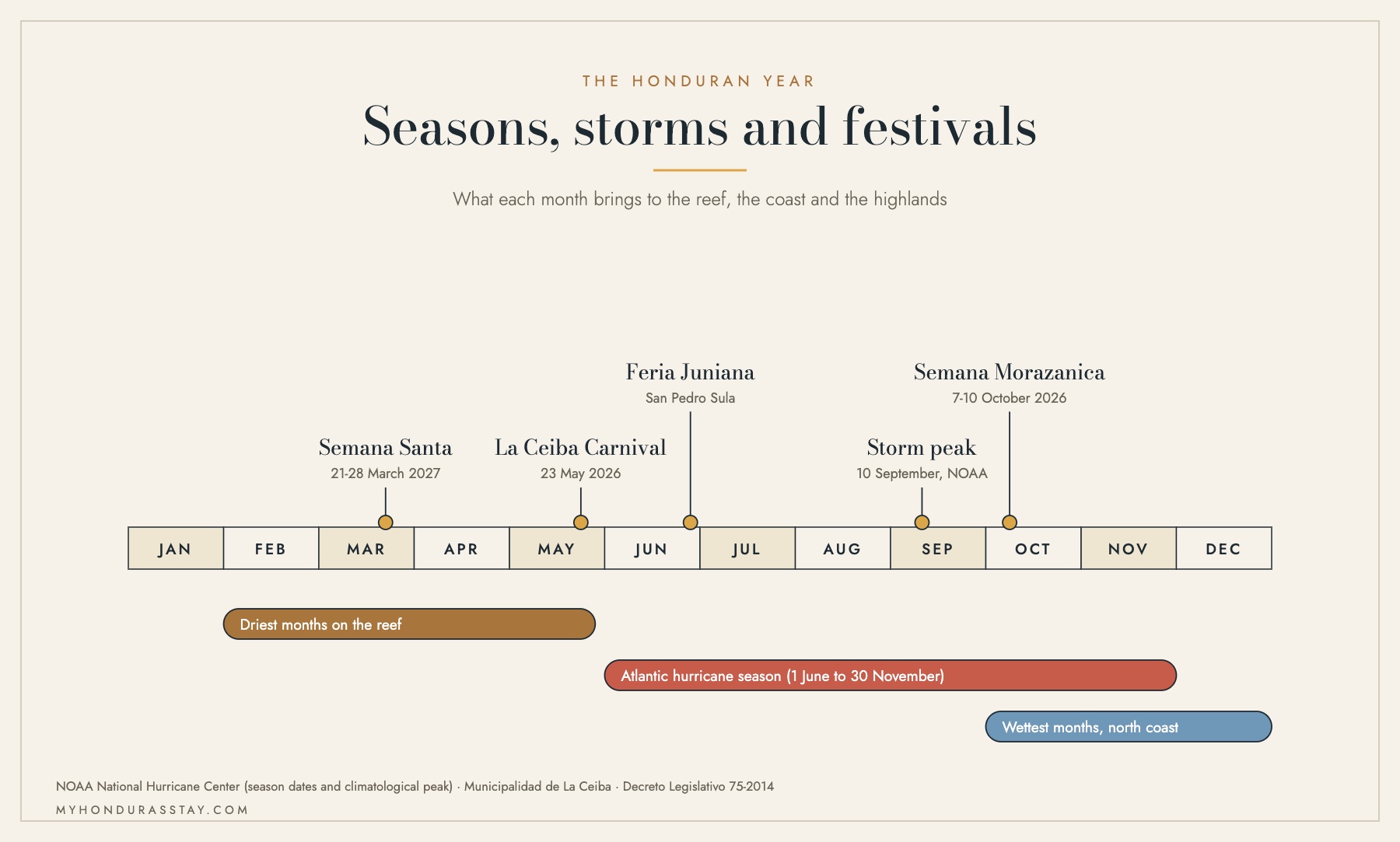
The Honduran year: seasons, storms and festivals. Sources: NOAA National Hurricane Center, Municipalidad de La Ceiba, Decreto Legislativo 75-2014.
Understanding the climate: the reef and the interior run on opposite calendars
Honduras does not have one rainy season, it has two, and they fall at different times. The Caribbean coast and the Bay Islands take their rain from the trade winds and from the cold fronts that reach the coast in winter, so their wettest months are October, November, December and January. The highlands and the Pacific side take theirs from the summer convection, so they are wettest from May to October and bone dry from December to March. Reading a single national average hides that split, and it is the main reason travellers get Honduras wrong.
The three places in the table below come from the same dataset, the ERA5 reanalysis (ECMWF) served through Open-Meteo, monthly means for 2001 to 2020, with a rainy day counted as a day with 1 mm or more.
Roatán and the Bay Islands
Roatán is the mildest of the three. Highs run from 79 °F (26 °C) in January and December to 84 °F (29 °C) in September, and the overnight low never drops below 76 °F (24 °C). The island's dry window is short and precise: April gets 1.0 in (25 mm) over 5 days, March 2.2 in (56 mm) over 10 days. Then the pattern flips, and October and November each bring 23 rainy days. Utila and Guanaja sit in the same weather, a few miles either side.
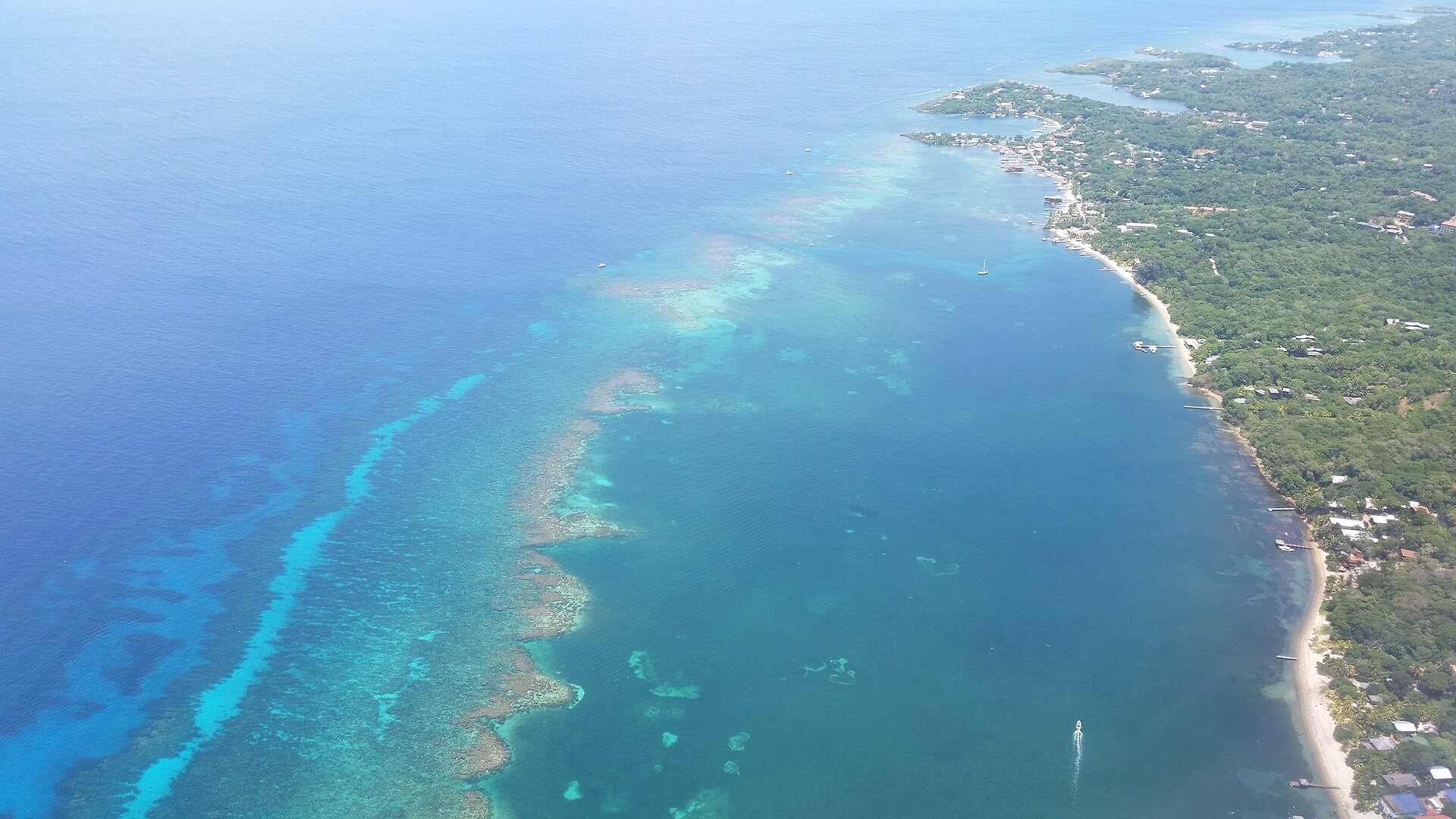
The reef line off West End, Roatan, in September. Photo: <a href="https://commons.wikimedia.org/wiki/File:Roatan_looking_north_towards_West_End.jpg">Pi3.124</a>, Wikimedia Commons, <a href="https://creativecommons.org/licenses/by-sa/4.0/">CC BY-SA 4.0</a>. Photo : Pi3.124, Wikimedia Commons, CC BY-SA 4.0.

La Ceiba and the north coast
La Ceiba is the wet one. The mainland coast catches the moisture that the Nombre de Dios range wrings out of the trade winds, and the result is 17.9 in (454 mm) in November, 13.3 in (337 mm) in October and still 11.7 in (296 mm) in January. Highs stay between 78 and 85 °F (26 and 29 °C) all year. Even in the driest month, April, the town records 2.8 in (71 mm) across 11 days. Rain here is the price of the rainforest above it, at Pico Bonito and along the Río Cangrejal.
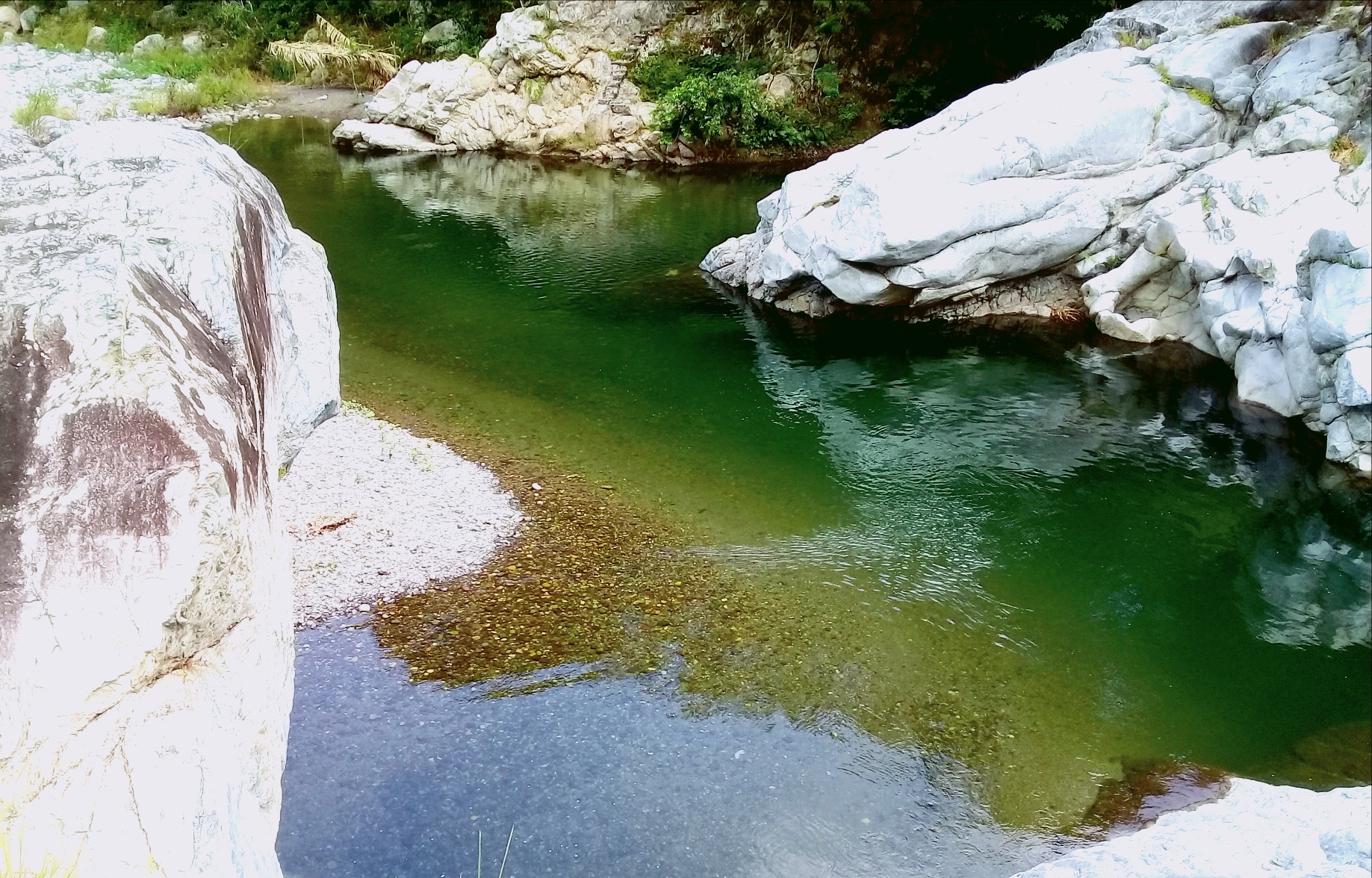
The Rio Cangrejal below Pico Bonito, near La Ceiba. Photo: <a href="https://commons.wikimedia.org/wiki/File:Rio_Cangrejal.jpg">JMigdonio</a>, Wikimedia Commons, <a href="https://creativecommons.org/licenses/by-sa/4.0/">CC BY-SA 4.0</a>. Photo : JMigdonio, Wikimedia Commons, CC BY-SA 4.0.

Tegucigalpa and the highlands
The capital sits near 3,250 ft (990 m), and altitude changes everything. Nights drop to 62 °F (17 °C) in January and February, highs reach 88 °F (31 °C) in April, and the dry season is genuinely dry: 0.3 in (8 mm) in January, 0.2 in (6 mm) in February, 3 rainy days or fewer. The rain arrives in May and stays until October, with 10.9 in (276 mm) in May and 10.5 in (267 mm) in September. Copán, Gracias and the Lenca highlands follow the same rhythm, one to two degrees cooler.

The highlands near Gracias, where the dry season runs from November to April. Illustration: MyHondurasStay. Illustration : Exclusive Luxury and Premium Hotel Booking in Honduras.
The dry season on the reef: February to May
This is the window the data supports. On Roatán, rainfall falls from 2.8 in (72 mm) in February to 1.0 in (25 mm) in April, rainy days from 11 to 5, and the sea warms from 81 °F (27 °C) to 84 °F (29 °C) by May. Inland, the highlands are still in their own dry season until late April, so this is the only stretch of the year when the reef and Copán are both at their best at the same time.
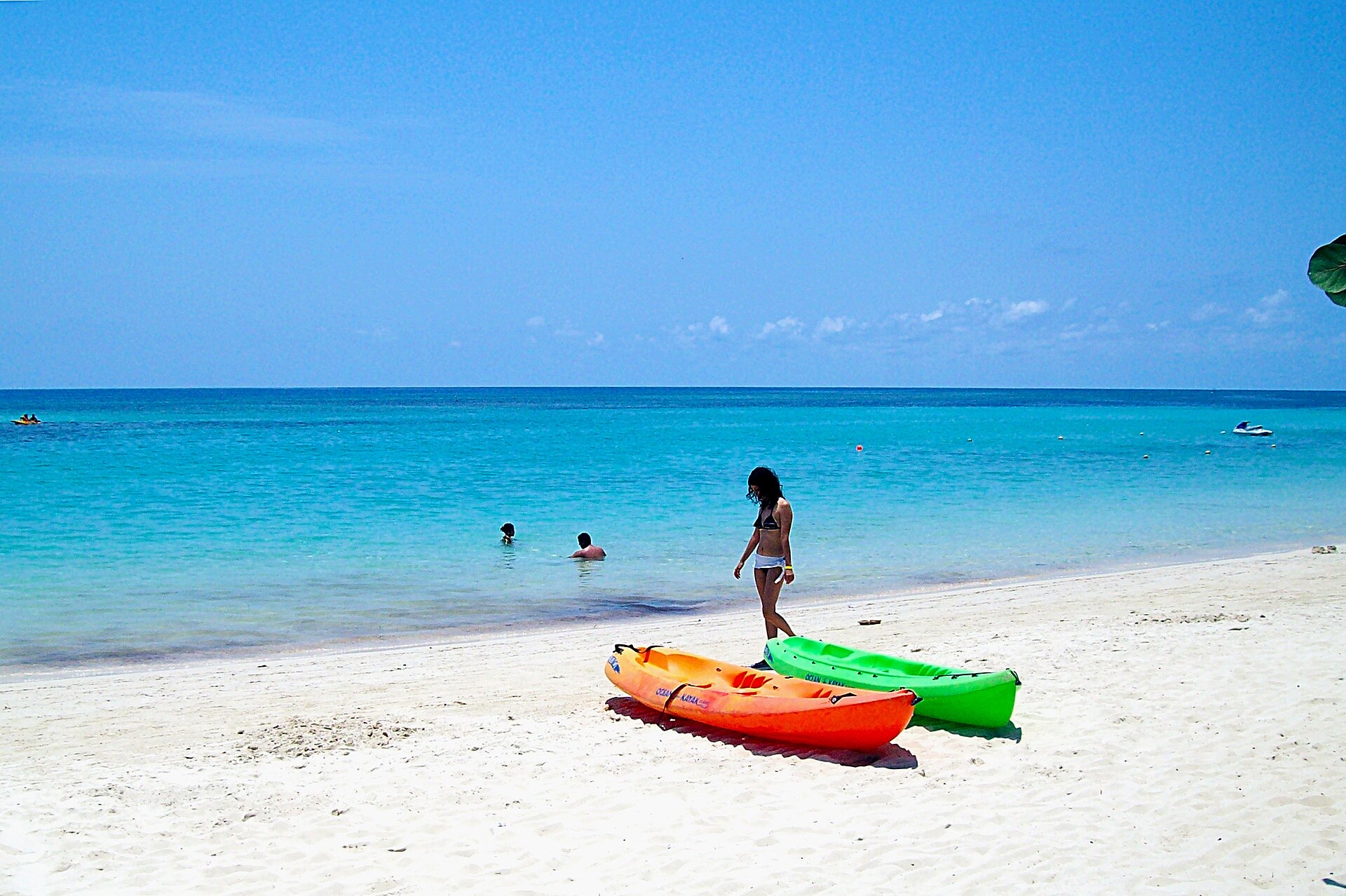
West Bay, Roatan, in late May. Photo: <a href="https://commons.wikimedia.org/wiki/File:West_Bay_Beach_-Roatan_-Honduras-23May2009-b.jpg">Adalberto Hernandez Vega</a>, Wikimedia Commons, <a href="https://creativecommons.org/licenses/by/2.0/">CC BY 2.0</a>. Photo : Adalberto Hernandez Vega, Wikimedia Commons, CC BY 2.0.

West Bay, Roatán, in late May. Photo: Adalberto Hernandez Vega, Wikimedia Commons, CC BY 2.0.
March is the busiest of these months, with 82,846 arrivals in 2024, and it carries Semana Santa in most years, when Honduran families take the coast and the islands. April 2024 was much quieter, at 56,148, because Easter fell in March that year. Read the two months together rather than one at a time.
What to plan for in the dry months:
- Book West Bay and the West End dive lodges early for the weeks around Semana Santa, which falls on 21 to 28 March in 2027.
- Expect cruise days on Roatán: Honduras received 1,802,495 cruise passengers in 2024 against 840,775 overnight tourists, and Mahogany Bay and Coxen Hole take the bulk of them.
- Carry rain cover anyway. April is the only month on Roatán with fewer than 8 rainy days.
- Late May is the quiet edge of the window, with the interior still dry and the coast not yet in its wet pattern.
The green season: June to September
The green season is not the wet season on the reef. Roatán's June to September rainfall runs between 2.4 and 4.4 in (60 and 113 mm), less than half of what falls in October. What changes is the heat and the sea: highs reach 83 to 84 °F (28 to 29 °C), and the water hits 85 °F (30 °C) in August and 86 °F (30 °C) in September, the warmest of the year. Inland is a different story, with Tegucigalpa taking 9.7 in (247 mm) in June and the mountains getting their downpour most afternoons.

Whale sharks off Utila, most often recorded in March and April. Illustration: MyHondurasStay. Illustration : Exclusive Luxury and Premium Hotel Booking in Honduras.
June is the single busiest month in Honduras, 91,932 arrivals in 2024, driven by North American school holidays and by Feria Juniana in San Pedro Sula. September is the emptiest, 48,569 arrivals, and it is also the month with the warmest sea. That combination is the real argument for a September trip, set against the fact that 10 September is the climatological peak of the Atlantic hurricane season.
Precautions for a green season trip:
- Take travel insurance that covers named storms, and book flexible rates from August onwards.
- Expect sargassum on windward beaches. The University of South Florida's Optical Oceanography Lab recorded a Caribbean peak in June and July 2026 and called 2026 the second largest sargassum year on record after 2025, with amounts falling every month until about November.
- Plan Copán and the Lenca highlands for the morning: the rain there comes in the afternoon.
- Keep a spare day either side of a Bay Islands flight in September and October.
The wet months and the northers: October to January
October, November, December and January are the four months to think hard about. Roatán takes 12.6 in (320 mm) in October, 12.2 in (311 mm) in November and 7.1 in (180 mm) in January, over 18 to 23 rainy days a month. La Ceiba is worse still, with 17.9 in (454 mm) in November. From November to February, cold fronts pushing down from North America, the northers, bring grey days, wind and sea swell to the Caribbean shore, which flattens visibility on the north-side dive sites.
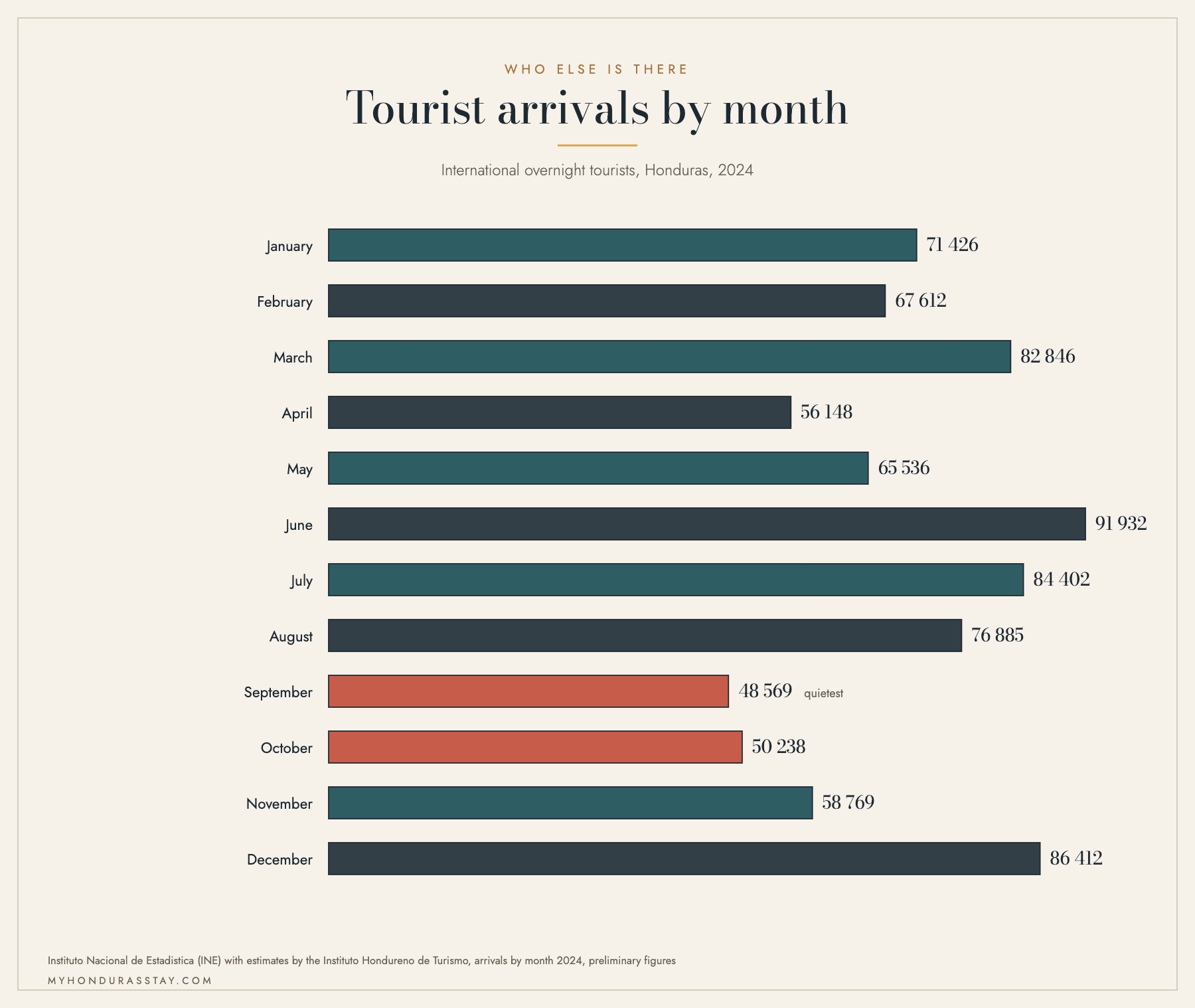
Tourist arrivals by month, Honduras, 2024. Source: Instituto Nacional de Estadistica with estimates by the Instituto Hondureno de Turismo, preliminary figures.
Two things still argue for these months. December is a busy, festive month, 86,412 arrivals in 2024, the second highest of the year, with clear spells between fronts. And the highlands are at their driest: Tegucigalpa records 0.5 in (12 mm) in December and 0.3 in (8 mm) in January, which makes a Copán, Gracias and Lake Yojoa itinerary work beautifully while the coast is soaked.
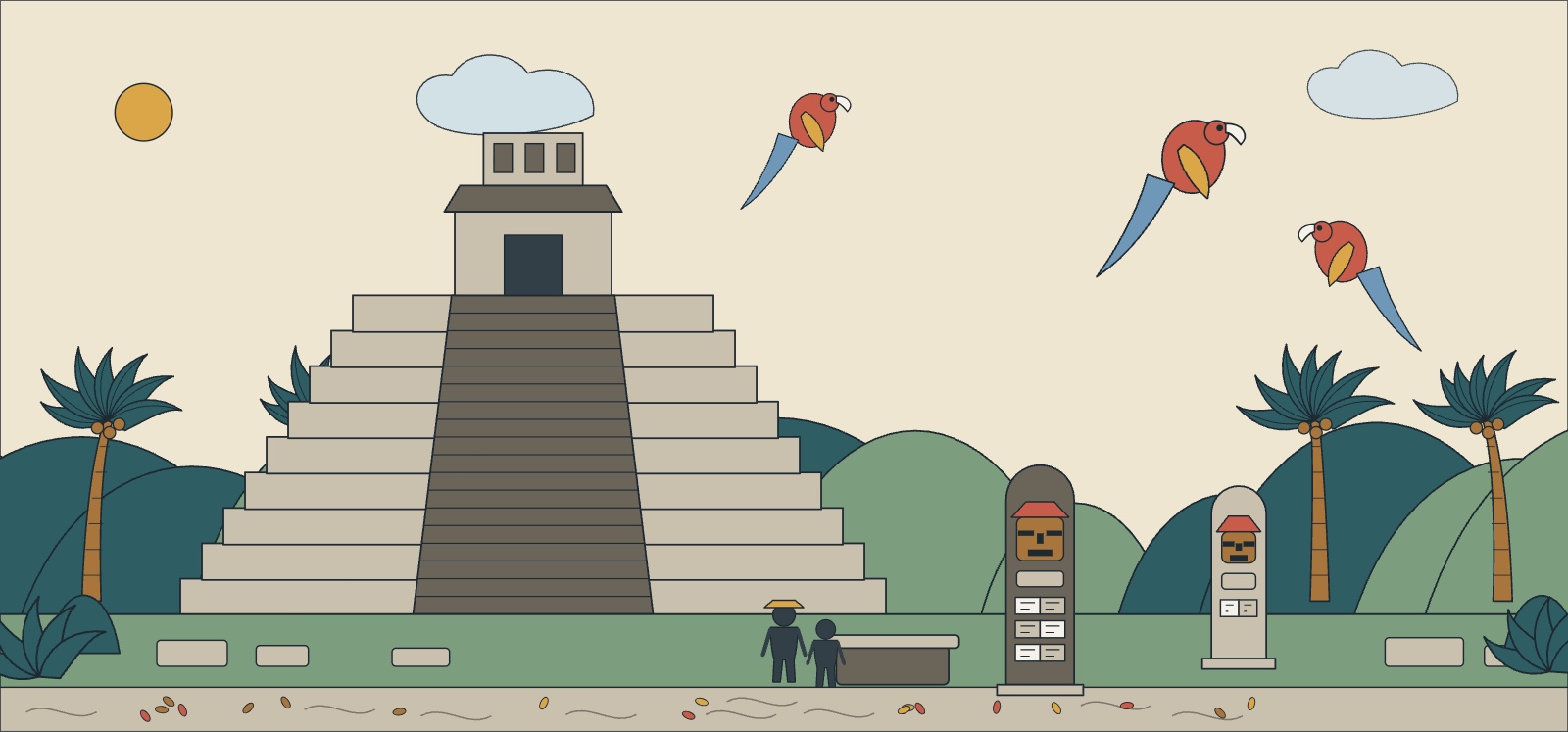
Copan, best visited between December and April. Illustration: MyHondurasStay. Illustration : Exclusive Luxury and Premium Hotel Booking in Honduras.
Hurricane season: what the risk actually is
The Atlantic hurricane season runs from 1 June to 30 November, and the NOAA National Hurricane Center puts the statistical peak on 10 September, with most activity between mid-August and mid-October. Honduras sits on the western edge of the basin, so the risk is not spread evenly across the country or across the season.
- The north coast and the Bay Islands carry the exposure. Hurricane Mitch came ashore on the morning of 29 October 1998 about 70 nautical miles east of La Ceiba with 70-knot winds, and the NHC report lists 34.52 in (877 mm) of rain at La Ceiba over seven days.
- The highlands see the rain and the flooding, not the wind. Choluteca recorded 35.89 in during the same event.
- Direct hits are rare. The Bay Islands have taken far more near misses than landfalls, which is why the diving industry keeps operating through the season.
- The practical rule: if you travel between mid-August and mid-October, buy the flexible fare, watch the NHC advisories five days out, and do not plan a one-night connection through La Ceiba or San Pedro Sula.
Honduras month by month
The figures below are for Roatán, the arrival place for most trips to Honduras. Sea temperatures are for the Bay Islands. Arrivals are international overnight tourists, for the whole country.
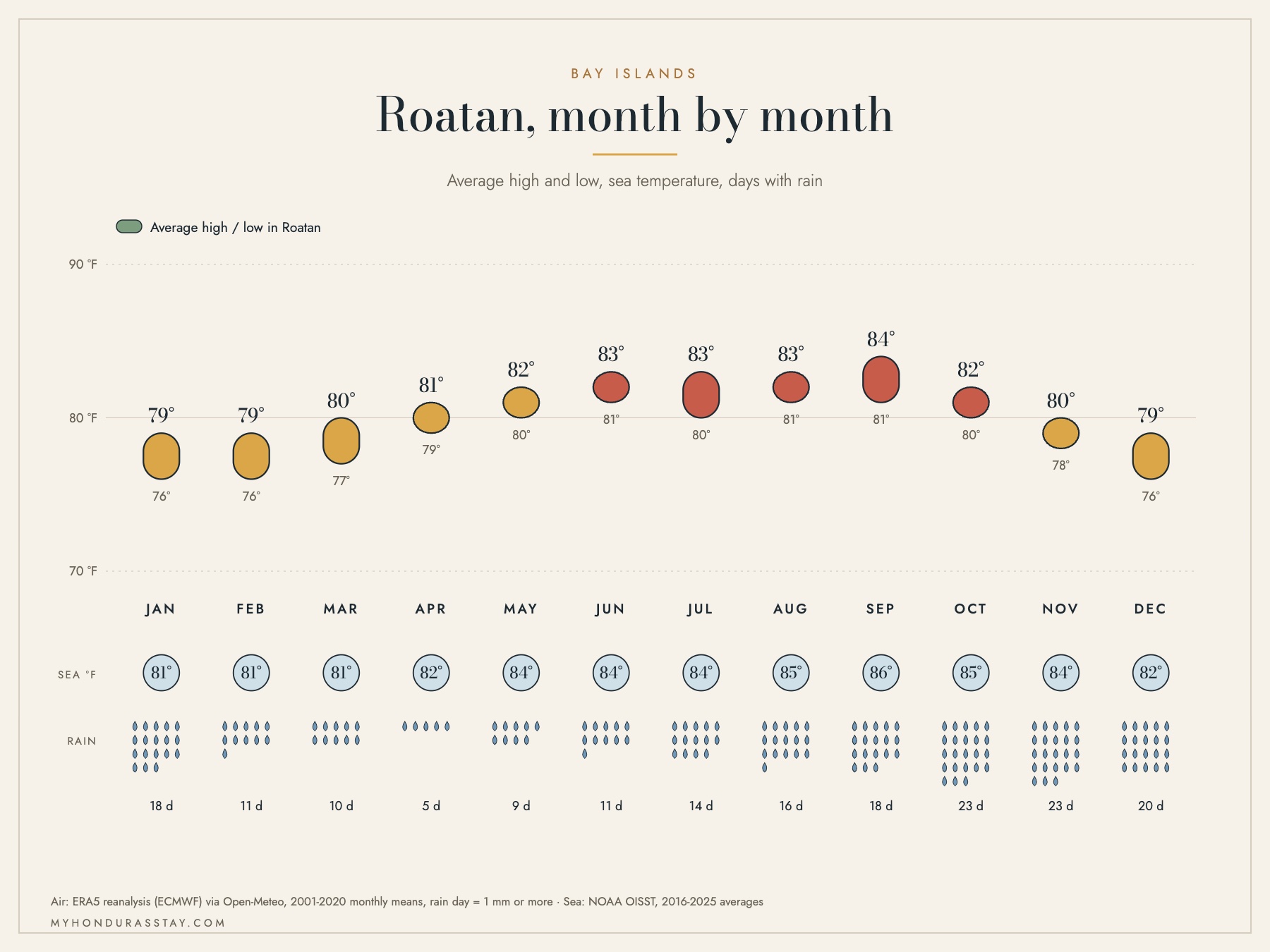
Roatan month by month. Sources: ERA5 reanalysis (ECMWF) via Open-Meteo 2001-2020, NOAA OISST 2016-2025.
| Month | High / low °F (°C) | Sea °F (°C) | Rain in (mm) | Rainy days | Arrivals 2024 | In three words |
|---|---|---|---|---|---|---|
| January | 79 / 76 (26 / 24) | 81 (27) | 7.1 (180) | 18 | 71,426 | Damp, warm, busy |
| February | 79 / 76 (26 / 25) | 81 (27) | 2.8 (72) | 11 | 67,612 | Drying out, steady |
| March | 80 / 77 (27 / 25) | 81 (27) | 2.2 (56) | 10 | 82,846 | Dry, clear, busy |
| April | 81 / 79 (27 / 26) | 82 (28) | 1.0 (25) | 5 | 56,148 | Driest, hot, quiet |
| May | 82 / 80 (28 / 27) | 84 (29) | 2.0 (50) | 9 | 65,536 | Warm sea, green |
| June | 83 / 81 (28 / 27) | 84 (29) | 2.7 (68) | 11 | 91,932 | Busiest, humid, festive |
| July | 83 / 80 (28 / 27) | 84 (29) | 2.4 (60) | 14 | 84,402 | Hot, showery, family |
| August | 83 / 81 (29 / 27) | 85 (30) | 3.6 (91) | 16 | 76,885 | Hot, sargassum, watchful |
| September | 84 / 81 (29 / 27) | 86 (30) | 4.4 (113) | 18 | 48,569 | Quietest, warmest sea |
| October | 82 / 80 (28 / 26) | 85 (30) | 12.6 (320) | 23 | 50,238 | Wettest, empty, risky |
| November | 80 / 78 (27 / 25) | 84 (29) | 12.2 (311) | 23 | 58,769 | Wet, windy, quiet |
| December | 79 / 76 (26 / 25) | 82 (28) | 7.1 (181) | 20 | 86,412 | Festive, damp, busy |
Air temperature and rainfall: ERA5 reanalysis (ECMWF) via Open-Meteo, monthly means 2001 to 2020, rainy day = 1 mm or more. Sea temperature: NOAA OISST, 2016 to 2025 averages, Bay Islands. Arrivals: Instituto Nacional de Estadística with estimates by the Instituto Hondureño de Turismo, 2024, preliminary figures.
The best time for what you want to do
Diving and snorkelling
March, April and May give the calmest water and the least runoff, which is what visibility depends on. The sea is warm enough for a 3 mm suit all year, from 81 °F (27 °C) in winter to 86 °F (30 °C) in September. Avoid the weeks after a norther between November and February on the north-side walls off Roatán, Utila and Guanaja, and dive the south shore instead when the wind turns.
Whale sharks off Utila
A study of 479 encounters recorded at Utila between 1999 and 2011, published in the Journal of Fish Biology, found sightings across the whole year with a clear peak in March and April, 95 individual sharks identified and a mean residency of 11.76 days. Local operators also report a second run in September and October. No month is a guarantee: the sharks follow the bait fish, not the calendar. See the Utila whale shark season guide.
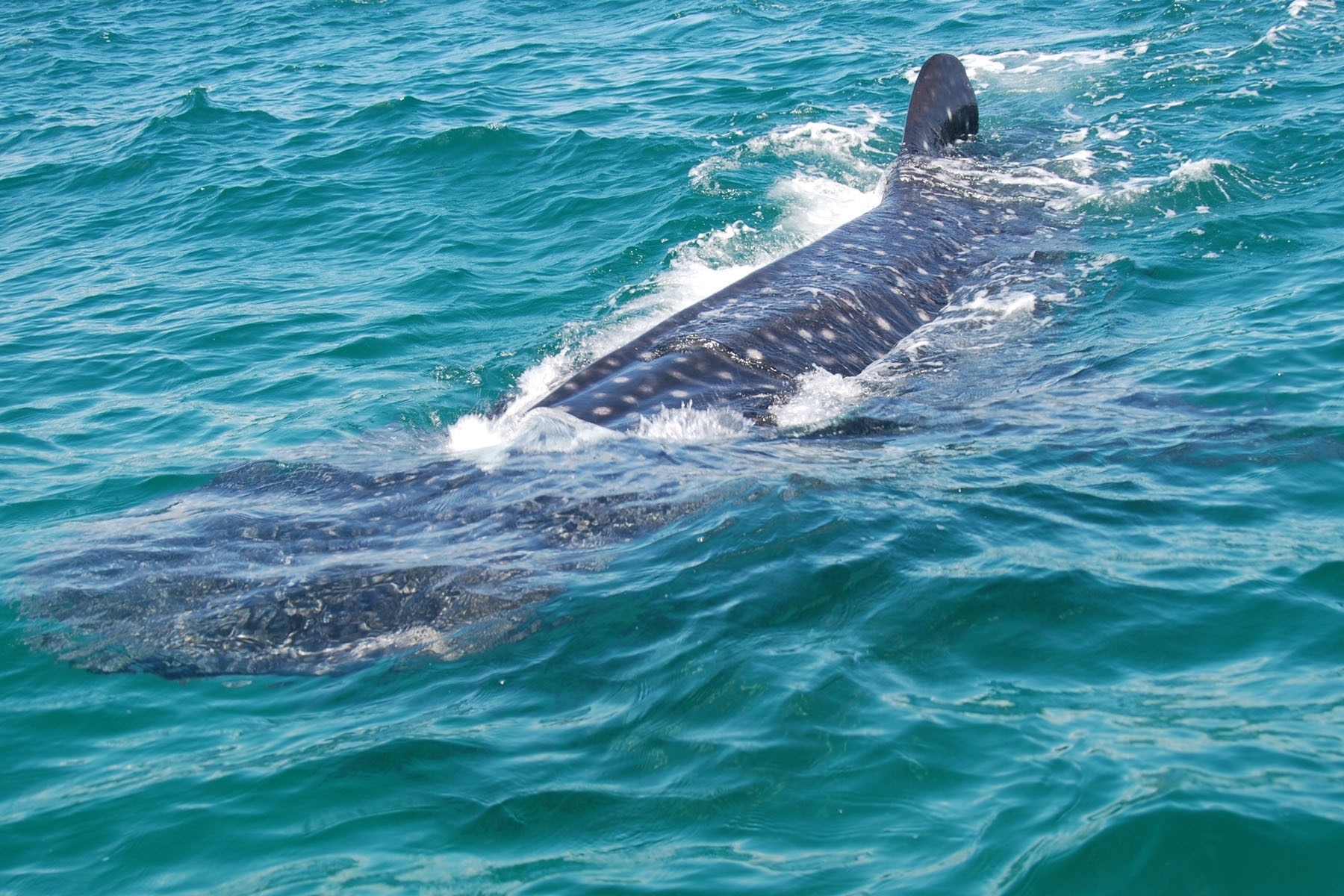
A whale shark in the western Caribbean. Photo: <a href="https://commons.wikimedia.org/wiki/File:Rhincodon_typus,_western_Caribbean_-_NOAA.jpg">NOAA Photo Library</a>, Wikimedia Commons, public domain. Photo : NOAA Photo Library, Wikimedia Commons, Public domain.

A whale shark in the western Caribbean. Photo: NOAA Photo Library, Wikimedia Commons, public domain.
Copán and the Maya sites
December to April, when the western highlands take almost no rain and the mornings are clear. Entry to the archaeological park and Las Sepulturas costs US$20 for visitors from outside Central America, the tunnels US$15 and the sculpture museum US$10. Late May, before the rains settle in, is the quiet alternative, and the late May window at Copán pairs well with two nights on the reef.
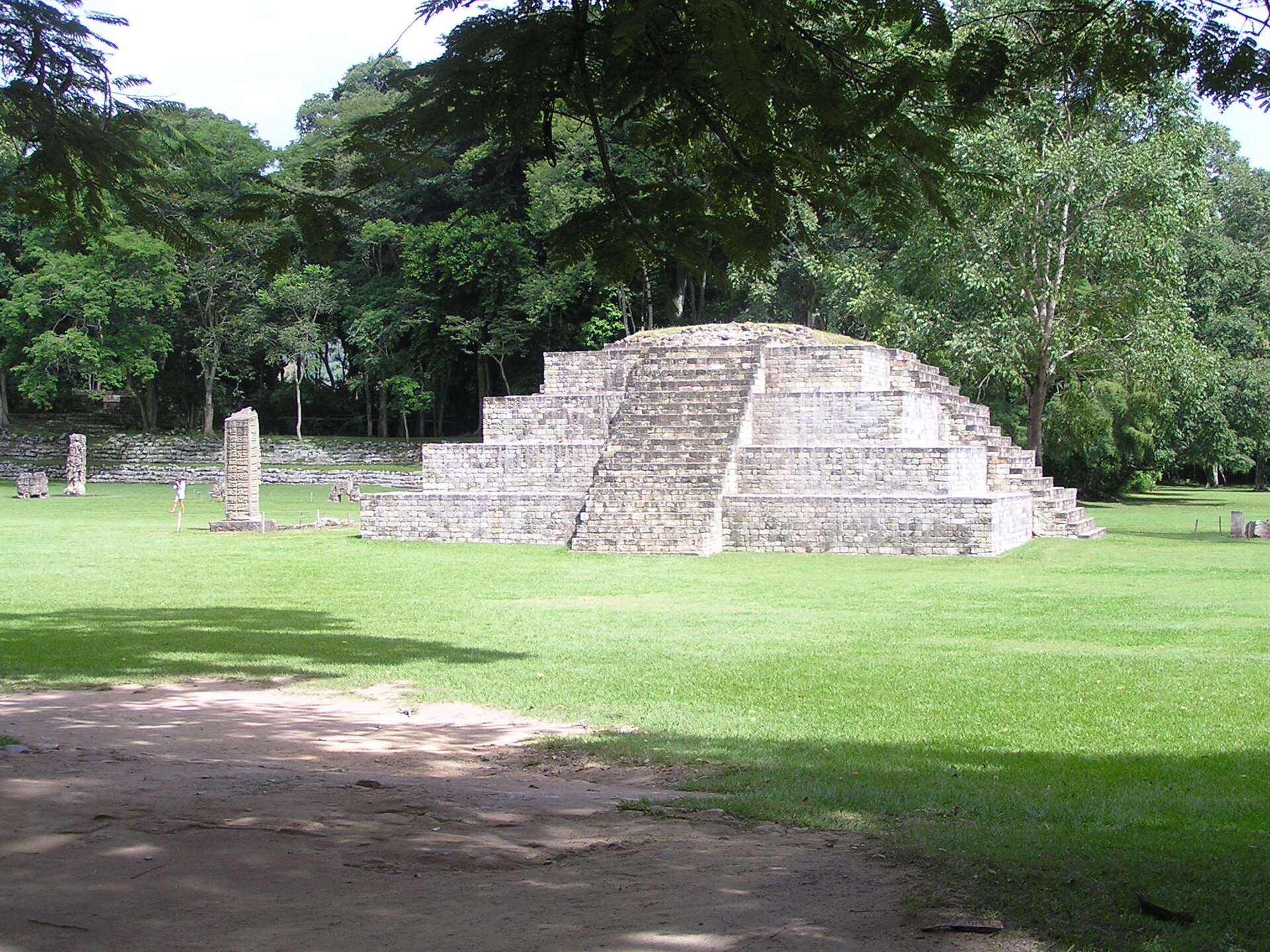
The Great Plaza and its stelae at Copan. Photo: <a href="https://commons.wikimedia.org/wiki/File:Copan_Ruins_-_panoramio.jpg">ogwen</a>, Wikimedia Commons, <a href="https://creativecommons.org/licenses/by-sa/3.0/">CC BY-SA 3.0</a>. Photo : ogwen, Wikimedia Commons, CC BY-SA 3.0.

The Great Plaza and its stelae at Copán. Photo: ogwen, Wikimedia Commons, CC BY-SA 3.0.
Families
Late June and July, when the sea is at 84 °F (29 °C), the reef is calm and the rain comes in short afternoon bursts. It is also the busiest stretch of the year, so book the West Bay properties months ahead. The green season family case sets out the trade-off.
Rainforest, birds and rivers
February to April on the Río Cangrejal and at Pico Bonito, when the trails are firm and the river runs clear. The north coast lodges sit right under the cloud forest, which is what makes the birding work. The Lodge at Pico Bonito sits at the edge of the national park.
Budget and quiet
September and October are the emptiest months by a wide margin, at 48,569 and 50,238 arrivals against a monthly average of 70,065. November is the next quietest at 58,769. Quiet is not free: those are also the wettest weeks and the tail of the storm season, which is exactly why rates fall. The September shoulder season move weighs it up.
Events that shape the year
Four dates move hotel demand more than the weather does.
- Semana Santa, 21 to 28 March 2027: the whole country travels, the coast fills, and Comayagua lays its sawdust carpets through the colonial centre on Good Friday.
- Día de la Etnia Negra Hondureña, 12 April: set by Legislative Decree 330-2002, it marks the Garífuna landing at Punta Gorda, on Roatán, on 12 April 1797, and is kept along the whole coast from Tela to Trujillo.
- Gran Carnaval Internacional de la Amistad, La Ceiba: the Feria Isidra runs through May and the main parade filled Avenida San Isidro on 23 May 2026.
- Semana Morazánica, 7 to 10 October 2026: Decreto Legislativo 75-2014 groups the October public holidays into one block to push domestic tourism, and Tela alone expected 200,000 visitors in 2026. It is the one week when the quietest month of the year is not quiet.
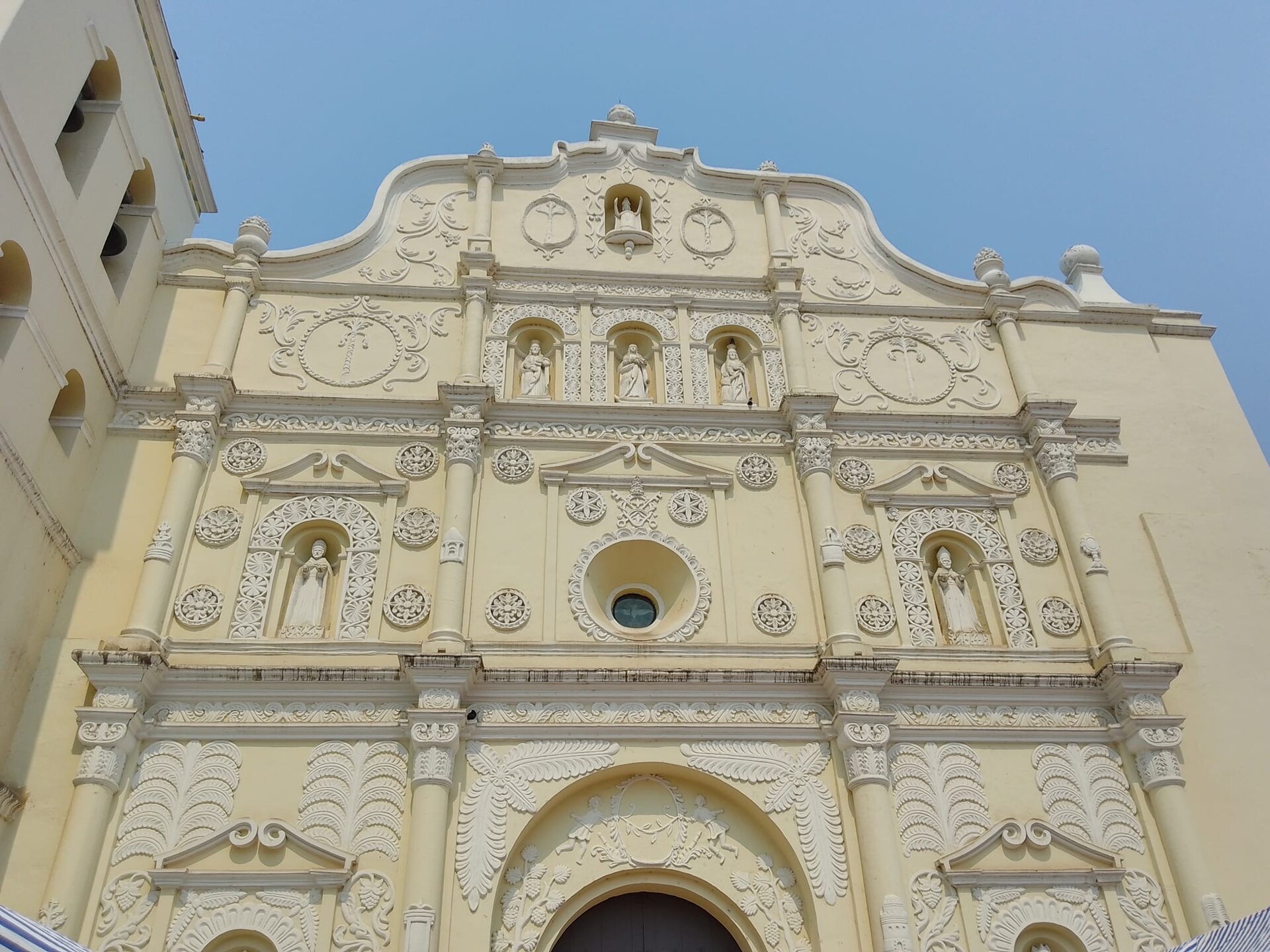
The Immaculate Conception cathedral in Comayagua, the centre of the Holy Week processions. Photo: <a href="https://commons.wikimedia.org/wiki/File:Immaculate_concepction_Cathedral_of_Comayagua_Fa%C3%A7ade_2022.jpg">Luis Alfredo Romero</a>, Wikimedia Commons, <a href="https://creativecommons.org/licenses/by/4.0/">CC BY 4.0</a>. Photo : Luis Alfredo Romero, Wikimedia Commons, CC BY 4.0.

The Immaculate Conception cathedral in Comayagua, the centre of the Holy Week processions. Photo: Luis Alfredo Romero, Wikimedia Commons, CC BY 4.0.
Independence Day on 15 September closes offices and fills the streets of Tegucigalpa and San Pedro Sula, and the Roatán events calendar tracks the island's own dates.
Where to stay, by season
- Grand Roatán Caribbean Resort, on West Bay: the beach end of the island, closest to the dry-season snorkelling.
- Ibagari Boutique Hotel, Roatán: a small adults-oriented address for the quiet months of September and November.
- Barefoot Cay Resort, Roatán: a private cay on the sheltered south shore, the side to be on when the northers blow.
- Manurii Boutique Hotel, Utila: the base for the March and April whale shark window.
- La Villa de Soledad, La Ceiba: in the Cangrejal valley, for the February to April rainforest window.
- Graham's Place, Guanaja: the least visited of the three Bay Islands, worth the extra flight in the quiet months.
FAQ
What is the best month to visit Honduras?
April is the best single month for the Bay Islands: Roatán records only 1.0 in (25 mm) of rain over 5 days, the sea sits at 82 °F (28 °C), and arrivals were below average in 2024 at 56,148. March is nearly as dry and clearer for Copán, but it is busier and often carries Semana Santa.
What is the rainiest month in Honduras?
October on the Caribbean side, and it is not close. Roatán averages 12.6 in (320 mm) across 23 rainy days, and La Ceiba 13.3 in (337 mm). November is almost identical, and La Ceiba's own wettest month is November at 17.9 in (454 mm). In the highlands the peak comes earlier, in May and September.
Does Honduras ever get hurricanes?
Yes, though direct landfalls are rare. The Atlantic season runs from 1 June to 30 November, with the peak on 10 September according to the NOAA National Hurricane Center. Hurricane Mitch came ashore near La Ceiba on 29 October 1998 and dropped 34.52 in (877 mm) of rain there. Most seasons pass the Bay Islands without a landfall.
What month is worst for hurricanes?
September, followed by October. The NOAA National Hurricane Center places the climatological peak of the Atlantic season on 10 September, with most activity between mid-August and mid-October. For Honduras, October adds the country's heaviest rainfall on top of the storm risk, which makes it the month to avoid if you only have one week.
Are there whale sharks around Utila?
Yes, and they can appear in any month. A Journal of Fish Biology study of 479 encounters at Utila between 1999 and 2011 identified 95 individual sharks and found the peak in March and April, with a mean residency of 11.76 days. Boats look for feeding activity at the surface rather than following a fixed calendar.
Is it cheap to vacation in Honduras?
Rates follow the arrivals curve rather than the weather. The quietest months, September and October, saw 48,569 and 50,238 arrivals in 2024 against a monthly average of 70,065, and that is when islands discount. June, July and December are the expensive months. Honduras publishes no official hotel rate index, so treat any figure you find as an estimate.
What is the best time to visit Roatán?
February to May, and April above all. Rainfall drops to 1.0 in (25 mm), the sea holds at 82 °F (28 °C) and the northers have stopped. September gives the warmest water, 86 °F (30 °C), and the emptiest resorts, against the peak of the hurricane season. Our Roatán timing guide goes further.
Is September a good time to visit Honduras?
It is the trade-off month. September brings the warmest sea of the year at 86 °F (30 °C) and the fewest visitors, 48,569 in 2024, so the reef and the resorts are quiet. It also contains the statistical peak of the hurricane season on 10 September and 18 rainy days on Roatán. Book flexible fares and it works.